


Handshake
Consultation on Amendments to Malta’s Merger Rules Antitrust, Competition and Trade

Consultation on Amendments to Malta’s Merger Rules

On 15 January 2026, the Office for Competition within the Malta Competition and Consumer Affairs Authority published a consultation document, together with proposed amendments, recommending changes to the Control of Concentrations Regulations. The changes, if implemented, would considerably change the merger control process in Malta. The main proposals are outlined below: Change in the thresholds: At present, concentrations are notifiable if the aggregate turnover of the parties in Malta exceeds EUR 2.3 million and each of the parties have a turnover in Malta of at least 10% of the aggregate turnover. The proposal envisages the increase of the trigger turnover…
Annalies Muscat
19th January 2026
Handshake
The European Commission Initiates a Public Consultation on the EU Merger Guidelines Antitrust, Competition and Trade

The European Commission Initiates a Public Consultation on the EU Merger Guidelines

The European Commission (the ‘Commission’) has launched a public consultation on the  8th May 2025 to gather feedback on its ongoing review of the EU merger guidelines, with the aim of updating the framework for assessing the competitive impact of mergers. This review seeks to reflect changes in the economy, by giving adequate weight to innovation, efficiency, sustainability, and other less major transformational needs amongst others. Feedback to the Commission may be submitted by 3rd September, 2025. The consultation covers both the horizontal merger guidelines (which were published in 2004), applicable to mergers between competitors, and the non-horizontal merger guidelines…
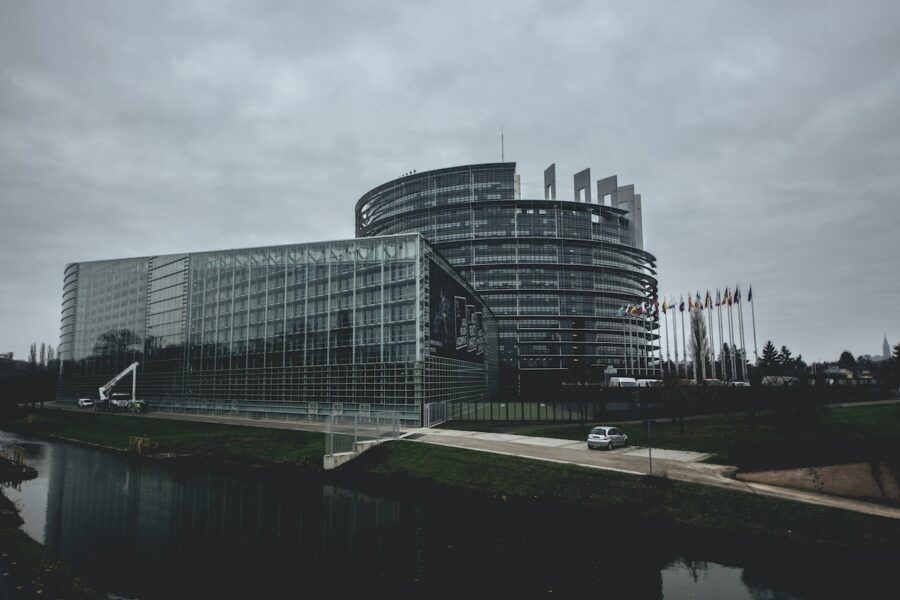
European Parliament, Strasbourg
Draft Guidelines on Abusive Exclusionary Conduct Antitrust, Competition and Trade

Draft Guidelines on Abusive Exclusionary Conduct

In August 2024 the European Commission published draft guidelines on the application of Article 102 of the Treaty on the Functioning of the European Union (“TFEU”) to abusive exclusionary conduct by dominant undertakings. Rather than the current guidance on enforcement priorities, this document has taken the shape of guidelines proper, similar to those found in respect of Article 101 TFEU. The intention is therefore that undertakings, legal counsel and competition authorities follow the doctrine laid out in the eventual guidelines when applying Article 102 TFEU to conduct by dominant undertakings that may be exclusionary in nature. Although the draft cites…
Annalies Muscat
12th September 2024
It’s Official – Most Influencers Do Not Disclose Commercial Content Antitrust, Competition and Trade

It’s Official – Most Influencers Do Not Disclose Commercial Content

On 14 February 2024, the European Commission published the results of a screening, known as a “sweep”, of social media posts from influencers that it had carried out together with the national consumer protection authorities of 22 Member States – including Malta –as well as those in Norway and Iceland. The results are out…and perhaps they are hardly surprising. Whilst 97% of influencers were found to publish posts with commercial content, only 20% systematically disclosed these posts as advertising. 38% did not use platform labels to disclose commercial content (for instance the “paid partnership” label on Instagram) but preferred to…
Annalies Muscat
29th February 2024
Influencer Marketing: Protection for Consumers from #sponsored Posts on Social Media Antitrust, Competition and Trade

Influencer Marketing: Protection for Consumers from #sponsored Posts on Social Media

We all know how important advertising is in the business world. Traders use advertisements as marketing tools to inform customers and consumers about their products. With the rise of technology and social media, advertising is now taking diverse forms. Companies are increasingly turning to a more powerful tool, the ‘influencer’, to advertise their products. This phenomenon is also evident locally.  This article purports to analyse what constitutes influencer marketing and the protection afforded to consumers by Maltese law. What is an ‘influencer’? Maltese law does not define what an influencer is. However, the Consumer Affairs Act (the ‘Act’) defines a…